

Rodolfo Valentino and Castellaneta: a Journey to the Birthplace of a Cinema Legend

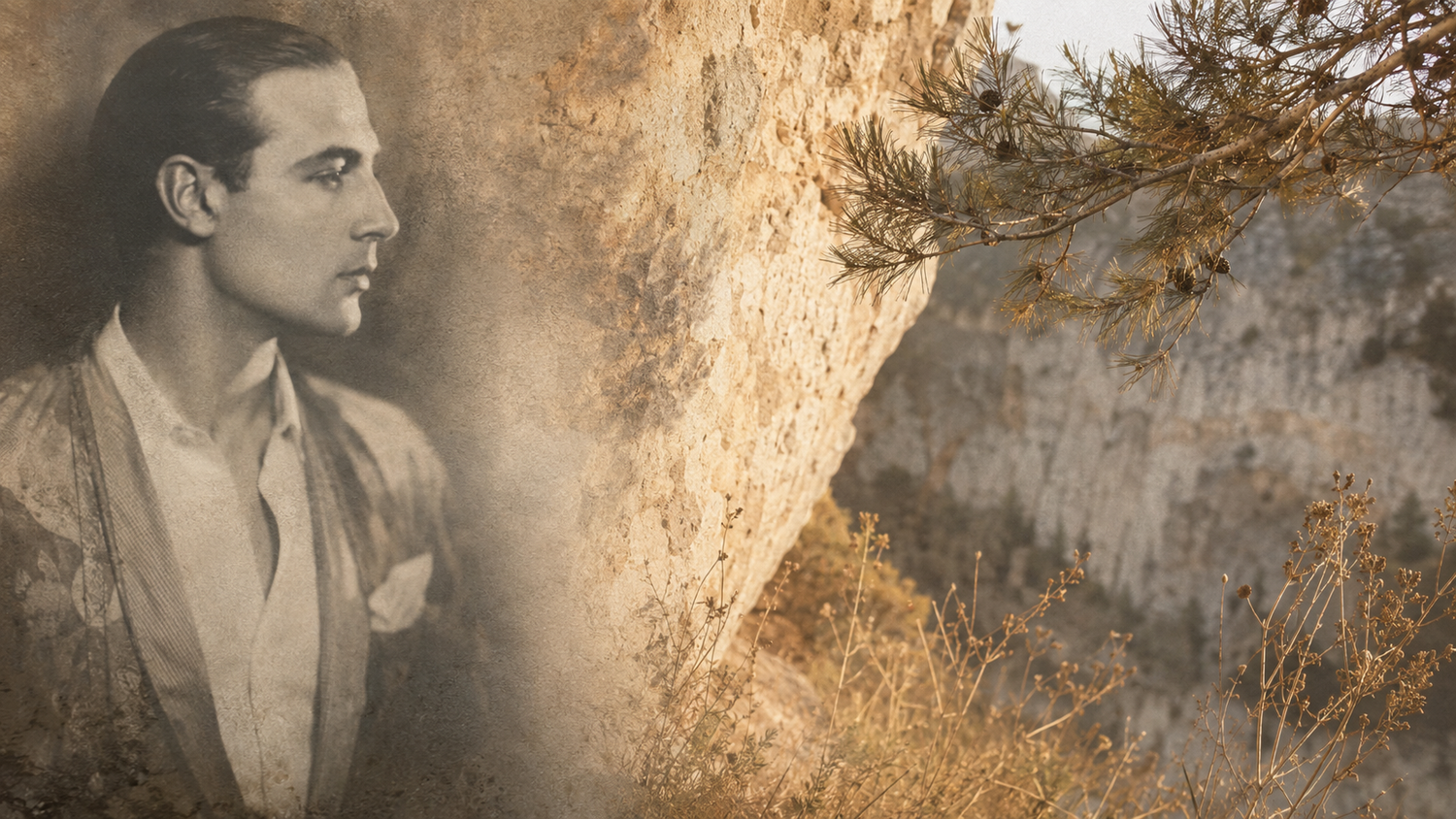
Before Hollywood, silent films and international fame, there was a boy born in a small Apulian town overlooking a landscape of dramatic ravines.
Rodolfo Valentino was born in Castellaneta on 6 May 1895. From here began a story that would cross borders, languages and generations, turning him into one of cinema’s first truly international stars.
Even today, walking through Castellaneta, Valentino’s presence feels like more than a memory from the past. It remains part of the town’s cultural identity and offers visitors the opportunity to discover a lesser-known side of Puglia, where the allure of cinema meets historic streets, natural landscapes and local heritage.
From Puglia to international cinema
Born Rodolfo Guglielmi, Valentino left Italy while still young and travelled to the United States. During the 1920s, he captivated audiences in films such as The Sheik, Blood and Sand, The Black Eagle and The Son of the Sheik.
Cinema was still silent, yet his expressions, gestures and screen presence communicated beyond words. Valentino became an international phenomenon and helped shape a new idea of cinematic celebrity.
His death in New York on 23 August 1926, at only 31 years of age, led to an unprecedented wave of public mourning. His legend, however, did not end with his passing. A century later, Rodolfo Valentino continues to be studied and celebrated as a major figure in popular culture and film history.
Castellaneta, Rodolfo Valentino’s hometown
Castellaneta has maintained a deep connection with its most famous citizen. In the historic centre, among narrow streets, old buildings and views across the ravine, Valentino’s story becomes part of a landscape that reveals a different Puglia from its best-known destinations.
The main point of reference is the MUV – Rodolfo Valentino Museum, housed in the former Convent of Santa Chiara. Its exhibition explores the actor’s life and career through photographs, information panels, film posters, screenings and reconstructions inspired by his movies.
This is more than a collection dedicated to a famous personality. The museum helps visitors understand how a young man who left Castellaneta became one of the first global icons of the silver screen.
For up-to-date information about visits, opening times and activities, consult the website of the Rodolfo Valentino Foundation, which works to preserve and promote his cultural legacy.
A historic town between cinema and ravines
A visit to the museum can become the starting point for discovering Castellaneta at a slower pace.
The historic centre stands beside the Gravina Grande, a deep natural ravine that characterises the landscape of the Murge Tarantine. Churches, historic buildings and viewpoints over the rocky valley create an environment where architecture and nature exist side by side.
Among its most representative landmarks are the Cathedral of San Nicola, the Church of San Domenico and the Bishop’s Palace. There is no need to follow a rigid itinerary: much of Castellaneta’s appeal can be experienced simply by wandering through its streets and discovering the sudden changes in the surrounding landscape.
The connection with Rodolfo Valentino adds another dimension to the visit. Seeing these places means coming closer to the geographical and cultural origins of a man who would become famous throughout the world.
The 2026 centenary
In 2026, Castellaneta marks the centenary of Rodolfo Valentino’s death with a programme of cultural initiatives, exhibitions, talks, performances and film screenings.
Events take place in several locations across Castellaneta and also involve Castellaneta Marina, on the Ionian coast. The centenary offers a special opportunity to rediscover Valentino and understand how strongly his legacy remains connected to the identity of the area.
As dates and events may change, visitors should consult the official programme published by the Municipality of Castellaneta for the latest information.
Beyond 2026, the museum, the historic centre and the places connected with Valentino will continue to make Castellaneta an appealing destination for travellers interested in cinema, culture and less predictable itineraries.
From the sea at Chiatona to the birthplace of Rodolfo Valentino
One of the most enjoyable aspects of this part of Puglia is the possibility of combining very different experiences without travelling long distances.
A day that begins near the sea and pine forest of Chiatona can continue through Castellaneta’s historic centre, the Rodolfo Valentino Museum and the landscape of the ravines. It is a natural way to combine the relaxed atmosphere of the Ionian coast with a cultural journey linked to a figure known around the world.
With its holiday apartments in a villa in Chiatona, Villa Ofelia offers a peaceful base for enjoying this balance. The sea, Mediterranean nature and outdoor spaces create a relaxing setting, while Castellaneta and other destinations across the Ionian area can become part of days devoted to culture and discovery.
Staying in Chiatona does not mean choosing only the sea. It also means being well placed to discover the stories, landscapes and places that reveal a less expected side of Puglia.